Hello!

Go to content

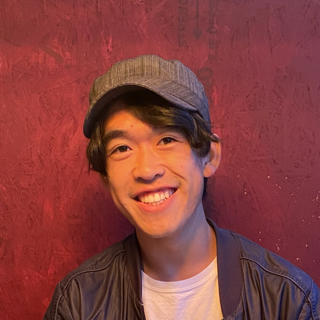
Nick Nhien's face

Hi, I'm Nick!

I'm a Bay Area native studying Computer Engineering & Philosophy @ UCLA.

Some hats I've worn:

Get in touch:

Things I spend my free time doing

When not coding or philosophizing, I like to:
  • Play piano
  • Brew pour over
  • Do photography
  • Play basketball
  • Watch anime
  • Do maintenance on my Honda Civic
  • Go camping with my friends
(if you have a mouse you should go back and hover over those for some fun facts)

Things I know how to do

Technical Skills

C/C++, CUDA, Prometheus, Grafana, machine learning, deep neural networks, high-performance computing, GPU architecture, CPU architecture, embedded systems programming, cloud computing, computer networking, DevOps, Python, Java, Django, React, JavaScript, REST, Docker, Kubernetes, git, SQL, Linux, FreeBSD, nginx, Android SDK, Golang, Elasticsearch, shell scripting, Kotlin, MIPS, OpenMP, Node.js, AWS

Interpersonal Skills

Teaching, Writing & documentation, Public speaking, Customer service, Strategic planning, User interface design

Things I've been cooking

Bomb go Boom

My senior capstone project involves working in a team to deliver a video game incorporating computer vision, speech recognition, gesture recognition, and networking two systems. We chose to adapt the game Keep Talking and Nobody Explodes and modify some puzzles to incorporate the required elements while also building a physical input device to interact with the game.

Tools Used

Python • OpenCV • Speech recognition • Bluetooth Low Energy • IMU • Arduino framework • PyQT

Convolutional Neural Network on CUDA

To apply what we learned about GPU architectures in Parallel and Distributed Computing, we were assigned a lab where we implemented a CNN with CUDA. The lab was graded primarily on correctness (as is important in parallel programs!) as well as performance. My implementation achieved a throughput of 486 GFLOPs.

Tools Used

C++ • CUDA • AWS • High-performance computingn • GPU architecture

Deep Learning Library

In ECE C147, we learned about the theory behind deep neural networks. As the course progressed, we slowly implemented a TensorFlow-like interface using NumPy's vectorization capabilities. We included linear, convolutional, maxpool, and dropout layers as well as allowing them to be trained with backpropagation.

Tools Used

Python • NumPy • Backpropagation • Neural networks

Cloud Infrastructure Migration

In sophomore year, I improved Bruinwalk's reliability by migrating its legacy infrastructure to a more robust Kubernetes-orchestrated cluster. Bruinwalk is a course and professor review site relied on by 93% of UCLA's undergraduate student body to decide which classes to enroll in. Reliability improved from consistently crashing during critical times to having over 99.9% uptime. To achieve this, I used some of what I already learned about networking and services from when I built a home cloud server during the COVID pandemic (we all had to find something to do) while also learning about Kubernetes.

Tools Used

Kubernetes • Docker • AWS • DigitalOcean • S3

Paper about privacy

I wrote a paper providing a strong, philosophic justification about the right to privacy and its applications in the tech industry in the second quarter of my sophomore year of college. It was published in Meditations, UCLA's undergraduate philosophy journal. It was selected among a pool of 13 other authors and enjoys company from my peers at Brown, NYU, and Princeton. I even convinced one of my professors to put it in the syllabus for a class about computer-mediated communication.

Tools Used

Brain • Writing

Engineering Ethics Reform

This isn't a technical project, but during my first quarter on campus I worked with some really cool people to push for reforming the engineering ethics curriculum. Engineering ethics is one of the most disliked courses by UCLA engineers, which is a shame (especially coming from a philosophy background).

Things I've taken at UCLA

  • Intro to C++ (CS 31)
  • Data Structures (CS 32)
  • Computer Organization (CS 33)
  • Software Construction (CS 35L)
  • Digital Logic (CS M51A)
  • Operating Systems (CS 111)
  • Networking (CS 118)
  • Fundamentals in Embedded Networked Systems (CS/ECE M119)
  • Programming Languages (CS 131)
  • Parallel and Distributed Computing (CS 133)
  • Computer-Mediated Communication (Communications 151)
  • Digital Design Laboratory (CS M152A)
  • Algorithms & Complexity (CS 180)
  • Queueing Systems Theory (CS 212; graduate section with Prof. Len Kleinrock (!))
  • Discrete Math, Complexity Theory, Computability Theory (Stanford's CS 103)
  • Linear Algebra (Math 33A)
  • Philosophy of Machine Learning (Phil 133C)
  • Intro to Electrical Engineering (ECE 3 & Stanford's ENGR 40M)
  • Engineering Design: Control Systems (ENGR 96C)
  • Systems and Signals (ECE 102)
  • Differential Equations (Math 33B)
  • Probability and Statistics (Math 170E)
  • Electrical and Electronic Circuits (ECE 100)
  • Digital Signal Processing (ECE 113)
  • Digital Electronic Circuits (ECE M116C)
  • Fundamentals in Embedded Networked Systems (CS/ECE M119)
  • Neural Networks and Deep Learning (ECE C147; Cross-listed as a graduate section)
  • Computer Systems Architecture (CS M151B/ECE M116C)
  • Systems Design (ECE 180DA/W, engineering capstone)
  • Intro to Political Philosophy (Phil 6)
  • Intro to Philosophy of Mind (Phil 7)
  • Ethical Theory [Writing Intensive] (Phil 22W)
  • Propositional Logic (Phil 31)
  • Greek Philosophy (Phil 100A)
  • Medieval Western Philosophy (Phil 100B)
  • Modern Western Philosophy (Phil 100C)
  • Kant (Phil C115; Cross-listed as a graduate section)
  • Philosophy of Language (Semantics) (Phil 127A)
  • Philosophy of Machine Learning (Phil 133C)
  • Modal Logic (Phil 136)
  • Topics in Normative Ethics: Truth-telling and Promising (Phil 153)
  • Alientation and Estrangement (Phil C156; Cross-listed as a graduate section)
  • Philosophy of Mind (Phil 170)
  • Close Reading of Søren Kierkegaard's Fear and Trembling (Phil 177B)
  • Seminar on Sartre's Critique of Pure Reason (Phil 244)
  • Single & multivariable calculus (High school)
  • Physics: Mechanics and E&M with E&M lab focus (Physics 1A/B/C, 4BL)
  • Seminar on Weaponized Interdependence within International Relations (Poli Sci Spring 2021 Fiat Lux)
  • Ways of Reading Race (English 100)
  • Applied Positive Neuroscience: Skills for Improving Productivity and Well-Being (Psychiatry 79)
  • Chinese Civilization (Chinese 50)